


Federal background investigator jobs are among the most consistently in-demand roles across the government and defense contracting space and also among the most poorly understood from the outside. The qualifications matter.
The clearance matters, but so does knowing how the hiring pipeline actually works, which track fits your background, and why a well-qualified candidate can still spend months getting nowhere.
This guide walks through every stage of the process: what the job actually involves, who is hiring and under what structure, how to build a competitive application, and what the clearance process looks like for someone entering this field. No filler. Just the mechanics of how this hiring market works and what you need to do to move through it.
How to find Federal Background Investigator Jobs?
Step 1: Understand What the Job Actually Requires
Federally credentialed background investigators conduct structured, field-based investigations on individuals seeking security clearances, federal employment, or public trust positions.
The work includes face-to-face subject interviews, employment and education verification, law enforcement and credit record checks, and the production of written case reports that meet strict federal standards reports that directly feed adjudication decisions affecting people's careers.
The Defense Counterintelligence and Security Agency (DCSA) is the central federal body for this work, providing personnel vetting services for more than 100 federal entities and approximately 10,000 cleared contractor facilities.
As per the research, DCSA conducts approximately 2 million background investigations each year. That volume creates persistent demand but it also means the agency manages its workforce carefully based on case inventory levels.
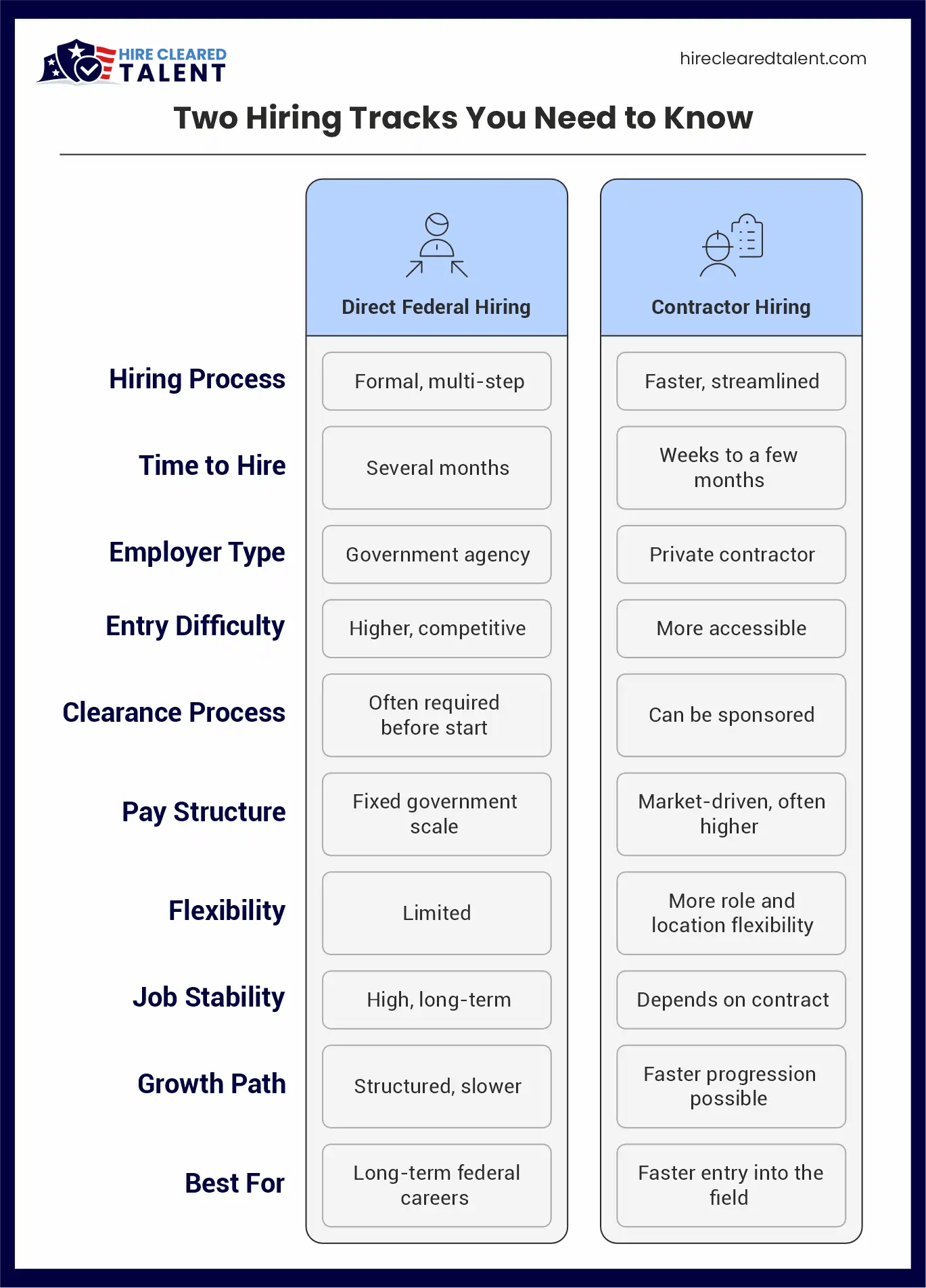
Investigator roles fall into two distinct tracks, and your first decision is which one you're actually targeting:
Direct Federal Employment: Positions posted on USAJOBS under the 1810 General Investigation series, typically at GG-7 through GG-13 grade levels. DCSA is the primary employer. These roles offer full federal benefits, locality pay, and career progression but the hiring process is slow and competitive.
Contractor (ISP) Employment: Several large Investigative Service Providers hold multi-year DCSA contracts and hire investigators nationwide, including at entry levels with credentialing training. Faster to access, different compensation structure, less job security.
Both tracks require the ability to obtain and hold a Top Secret clearance. Both require field work - your own vehicle, willingness to travel, a home office with reliable internet. And both reward the same core competency: the ability to conduct thorough, accurate, well-documented investigations under deadline pressure.
Step 2: Know the Market Conditions Before You Apply
The background investigations market has real dynamics you need to understand before you spend time targeting the wrong opportunities.
DCSA has been working down a significant case backlog that built up over the past two years. Federal News Network reported in May 2025 that DCSA's investigation inventory dropped 24 percent from approximately 291,200 cases in September 2024 to 222,700 cases by April 2025.
A dedicated tiger team identified bottlenecks in workload forecasting and records processing, then implemented targeted fixes. That's a real improvement. But it also means DCSA is in an active workforce-shaping mode, managing headcount against a declining inventory rather than aggressively expanding it.
At the same time, the shift toward Continuous Vetting under the Trusted Workforce 2.0 initiative is changing the investigative workload itself. Traditional periodic reinvestigations which historically generated steady, predictable demand for field investigators are declining in frequency.
As of 2021, all Department of Defense clearance holders (roughly 3.6 million people) were enrolled in continuous vetting, with civilian agencies following under TW 2.0. Automated record checks now handle what used to require in-person investigative follow-up.
Here's what most people in this industry don't say out loud: the investigators who struggle to find stable work right now aren't the ones with bad qualifications, they're the ones who treated this like a static government jobs market and applied without understanding where the actual demand sits.
Contract ISP work through the major providers has more open slots at any given time than direct federal positions. But federal positions offer the career stability and benefits that most experienced investigators eventually want. Knowing which track you're targeting at which stage of your career is the strategic question that nobody seems to answer clearly.
The practical takeaway: direct federal investigator billets require patience and persistence. Contractor positions move faster but require you to manage caseload variability. And experienced investigators who hold active Top Secret clearances will consistently outcompete everyone else in both channels.
Step 3: Build Qualifications That Actually Move Applications Forward
Federal hiring for the 1810 series scores applications against defined competencies. Here's what the eligibility baseline actually looks like for most entry-level investigator positions:
U.S. citizenship - no exceptions, no waivers.
Bachelor's degree or four or more years of general work experience (some agencies accept equivalent combinations).
Ability to obtain and maintain a Top Secret security clearance.
Valid driver's license, reliable personal vehicle, and willingness to travel (typically up to 100 miles roundtrip for field leads).
Home office with high-speed internet and a personal computer compatible with federal case management systems.
Strong written communication skills - federal investigative reports are legal documents, not summaries.
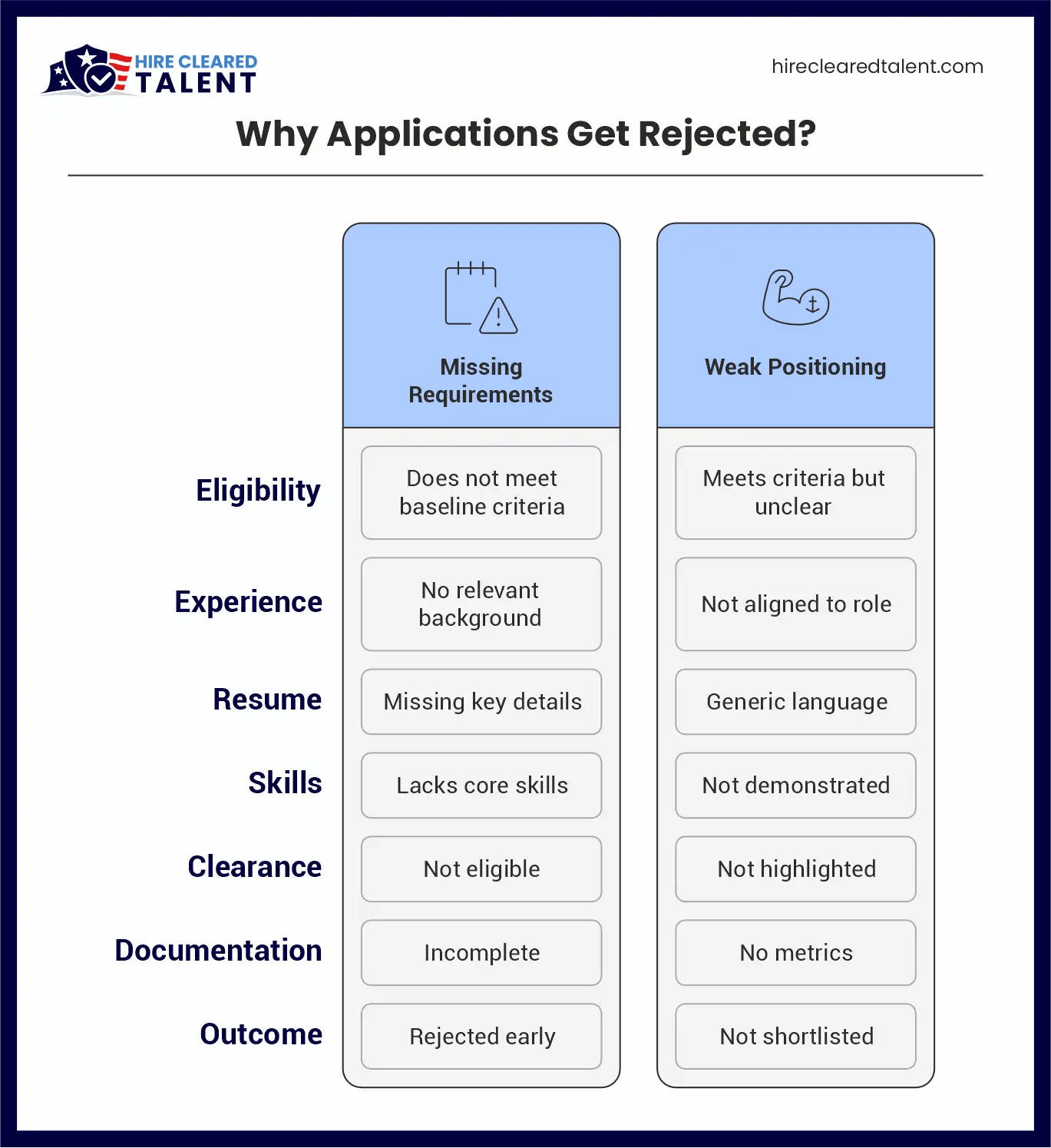
For experienced-level positions, which carry materially better pay and professional autonomy - prior DCSA, NBIB, or OPM investigative credentialing is either required or weighted so heavily that lacking it makes you functionally non-competitive.
An active Top Secret clearance that doesn't require sponsorship is an enormous advantage. Some hiring managers will wait for the right candidate. Many will simply move to the next one rather than absorb a clearance sponsorship timeline.
If you're coming from adjacent backgrounds, military intelligence, law enforcement, HR investigations, social work with federal agencies - your transferable skills are real. But they need to be explicitly translated into the investigative competencies that federal HR reviewers are scoring against.
"Conducted interviews" reads very differently than "conducted structured investigative interviews with subjects, employers, and character references in support of T3 and T5 federal personnel security investigations."
Write reports. Candidates who have documented, measurable case history investigations completed, reports accepted without return, quality assurance pass rates will consistently outperform candidates who list duties without outcomes. If you're building this experience through a contractor role first, track your numbers from day one.
Step 4: Build a Federal Resume That Survives the Screening Process
A federal resume is not a private-sector resume with more pages. It's a structured document designed to demonstrate that your experience maps to the specific competencies listed in a job announcement, and it needs to do that in enough detail that a human reviewer or automated screening system can score it accurately.
For 1810-series positions, this typically means:
Length: Four to six pages. This is normal. A two-page resume will be screened out for insufficient detail on specialized experience, not praised for conciseness.
Specificity: Every position should describe what you actually did, not a job description, but your specific actions and measurable outputs. "Completed an average of 12 T3 cases per month with a 96% first-submission acceptance rate" tells a reviewer something concrete. "Conducted background investigations" tells them almost nothing.
Language alignment: Use the exact terminology from the job announcement investigation tiers (T3, T5), specific record types, federal case management systems if you've used them. Federal HR screeners match keywords.
Self-assessment questionnaires: Most USAJOBS announcements include proficiency self-assessments. Candidates who underrate themselves get ranked lower. Rate yourself accurately and assertively, then make sure your resume narrative supports every high rating with documented evidence.
And set USAJOBS alerts today. Most federal investigator postings in the 1810 series are open for five to ten business days.
Missing an announcement because you weren't actively monitoring is the single most common reason qualified candidates miss opportunities in this field.
Filter for Series 1810, keywords including "background investigator" and "personnel security investigator," and specific DCSA postings filtered by grade level and geographic preference.
Step 5: Decide Whether the Contractor Path Is Your Better First Move
For candidates without prior DCSA or OPM credentialing, the major ISPs that hold federal investigation contracts offer something the direct federal pipeline doesn't: a legitimate entry point with training.
Several of these firms hire new investigators with no prior field investigation experience, run them through a credentialing program, and assign caseloads under supervision.
This path has real tradeoffs. Entry-level ISP compensation is often structured on a per-case or per-unit basis, which means your income tracks directly with caseload volume. When DCSA inventory is high, the pay is competitive.
When the agency is in a drawdown mode as it has been available case volume per investigator can compress. Benefits structures differ from federal employment. Job security is contract-dependent.
But the strategic case for this path is clear. Credentialed field experience as an ISP investigator is exactly the qualification that makes direct federal investigator positions accessible.
The federal background investigation community is small enough that quality follows your name. Investigators who consistently produce thorough, timely, well-written case reports get known. Federal hiring managers draw from that population. The contractor path isn't a fallback for candidates without investigative credentials, it's often the fastest route to the more stable position they actually want.
Think of it this way: a newly hired program manager at a cleared defense contractor doesn't get handed a $50M program on day one. They cut their teeth on smaller task orders, build a record, and earn the larger responsibilities.
Investigative careers work the same way. Credentialing through an ISP is how you build the record that makes the next door open.
Step 6: Prepare for Your Own Background Investigation
You cannot investigate other people's backgrounds without passing a rigorous one yourself. This is not a formality, it's a substantive process, and candidates who haven't thought carefully about their own personal history regularly encounter delays or complications that could have been anticipated and addressed.
The SF-86 (Questionnaire for National Security Positions) is the standard application for Top Secret clearance investigations. Per DCSA's 2025 transition guidance, the updated February 2024 version of the SF-86 is now required for all new investigations initiated after May 2025.
Any prior version is no longer accepted. Security offices managing existing cases were directed to submit to adjudication before the August 1, 2025 deadline or reinitiate on the new form.
The SF-86 covers: residential history for the past ten years, employment history, education, foreign contacts and travel, financial history, criminal record, drug use, and mental health treatment in certain circumstances. It's exhaustive by design.
What disqualifies candidates most often isn't the underlying issue, it's incomplete or inaccurate disclosure of that issue. The adjudicative guidelines that govern clearance decisions weigh recency, severity, circumstances, and documented rehabilitation.
Investigators applying for these positions understand this framework better than most applicants because they apply it daily to the subjects they investigate. Apply it to yourself. Disclose accurately and completely, then let the adjudicative guidelines do what they're designed to do.
For the behavioral interview itself which is standard for both federal and major contractor positions prepare specific documented examples for: managing a difficult or uncooperative interview subject, resolving a discrepancy in an investigative record, meeting a tight case-completion deadline under resource constraints, and handling sensitive personal information in a way that maintained subject dignity and case integrity simultaneously.
Step 7: Track Your Professional Development and Build Visibility in the Right Places
Investigator careers don't grow through passive tenure. They grow through demonstrable quality, professional credentialing, and being visible to the right employers at the right time.
On the credentialing side: DCSA's credentialing program is the baseline for federal investigative work, but there are supplementary credentials in the personnel security field the Personnel Security Professional (PSP) certification through ASIS International, for example that signal seriousness to federal hiring managers and can meaningfully differentiate a candidate in a competitive pool.
On the visibility side: this is where the structure of cleared hiring matters enormously. The 2023 Security Clearance Compensation Report from ClearanceJobs which surveyed nearly 50,000 clearance holders found that early-career cleared professionals averaged $68,903 annually, mid-level investigators $78,252, and senior-level $93,256.
Management-track investigators averaged $123,141. Those compensation jumps happen when investigators build visible track records, not just longevity.
Applying through general job boards puts cleared professionals in direct competition with large non-cleared applicant pools for roles that require specialized federal investigative credentials. That's an inefficient use of a hard-earned clearance and a documented case history.
Cleared hiring platforms that specifically connect credentialed investigators with federal agencies and defense contractors eliminate that friction, your clearance level and investigative background are immediately relevant, not buried in a general applicant pool.
A complete profile on HireClearedTalent including your clearance level, credentialing status, investigation tier experience, and availability puts your background directly in front of the federal agencies and ISPs that search specifically for cleared investigative talent. If you've done the work outlined in this guide, that profile is where the return on that investment begins.
The Direct Path Forward
Landing a federal background investigator position isn't complicated but it does require moving through the right steps in the right sequence. Get clear on which track fits your current credentials. Build a federal resume that maps explicitly to 1810-series competencies.
Set USAJOBS alerts and treat announcement windows as hard deadlines. If you don't yet have investigative credentials, the ISP route is the fastest path to building them. And make sure your own disclosures are complete and accurate before your application ever reaches a hiring manager.
The demand for credentialed investigators isn't disappearing. Even as DCSA works down its current case backlog and Continuous Vetting changes the shape of the workload, the fundamental need to vet individuals for trusted positions in the federal government remains constant. Experienced, cleared investigators who know how to work a case and write a clean report will always have a place in this market.
Start With the Right Foundation
If you're pursuing federal background investigator work whether through a direct federal billet, an ISP contractor role, or a transition from adjacent cleared experience visibility to the right employers matters as much as qualifications.
Create your free profile on HireClearedTalent to connect directly with federal agencies and defense contractors actively searching for cleared investigative professionals. Your clearance and case history are already the hard part.
Want a direct read on how your specific background translates to this market, which openings fit your clearance level, or how to position a career transition into this field?
Schedule a call with our cleared career experts!
FAQ-
Q1- What qualifications are required to become a federal background investigator?
A- Most roles require a bachelor’s degree or equivalent experience. Employers look for investigative, analytical, or law enforcement backgrounds. Strong writing and interviewing skills are also important.
Q2- Do you need prior law enforcement experience for background investigator jobs?
A- Law enforcement experience helps but is not required. Candidates with military, HR, or investigative support experience also qualify. Transferable skills matter more than job titles.
Q3- How do you apply for federal background investigator positions?
A- Apply through contractor websites and federal job portals. Tailor your resume to highlight investigative and reporting skills. Follow application instructions closely to avoid rejection.
Q4- What clearance is required for background investigator roles?
A- Most roles require at least a Secret clearance, with some needing higher levels. You may be sponsored if you meet eligibility requirements. Background checks are part of the hiring process.
Q5- How long does it take to get hired as a background investigator?
A- Hiring timelines vary based on clearance status and workload. Candidates with active clearance move faster. New investigations can take several months.
Q6- What skills help candidates succeed in background investigator roles?
A- Strong interviewing, documentation, and attention to detail are critical. Time management and report writing skills also play a key role. Accuracy is essential in every case.
Q7- What does a typical background investigator job involve?
A- The role includes conducting interviews, verifying records, and writing detailed reports. Investigators gather information to support clearance decisions. Work often involves travel and fieldwork.
Q8- Are background investigator jobs in demand?
A- Yes, demand remains steady due to ongoing clearance requirements. Agencies process large volumes of investigations each year. This creates consistent hiring needs.
Q9- Can veterans transition easily into background investigator roles?
A- Yes, veterans often have relevant experience in security and operations. Their background aligns well with investigation work. Clearance status also gives them an advantage.
Q10- What certifications or training help in getting hired?
A- Certifications in security, investigations, or compliance add value. Training in report writing and interviewing improves readiness. Employers prioritize practical skills.
Weekly newsletter
Get the latest blog updates, practical hiring insights, and featured reads delivered straight to your inbox.
Read about our Privacy Policy.